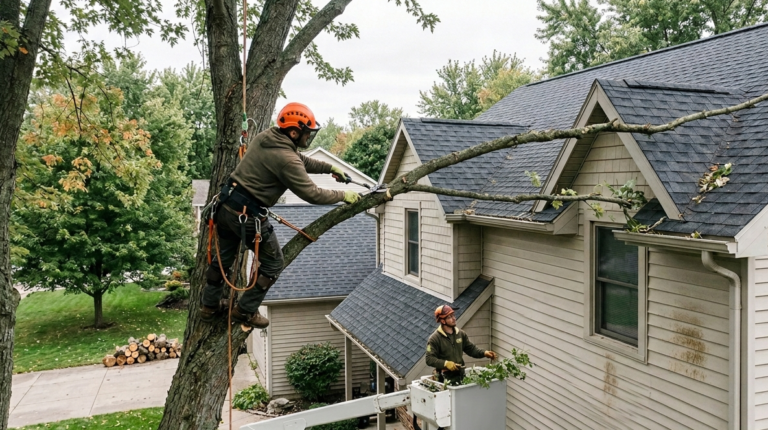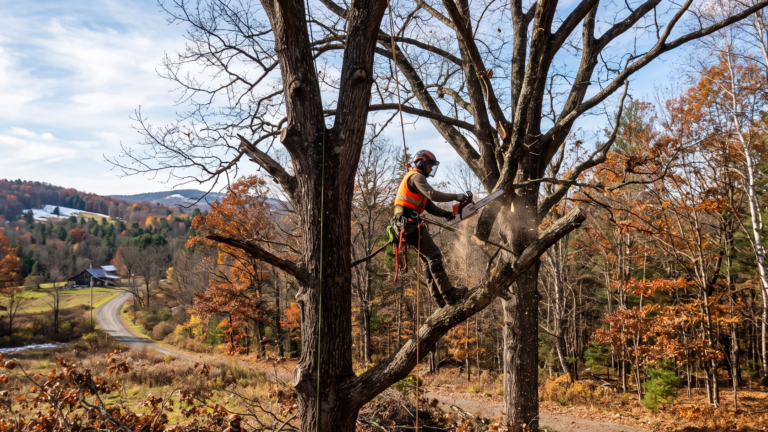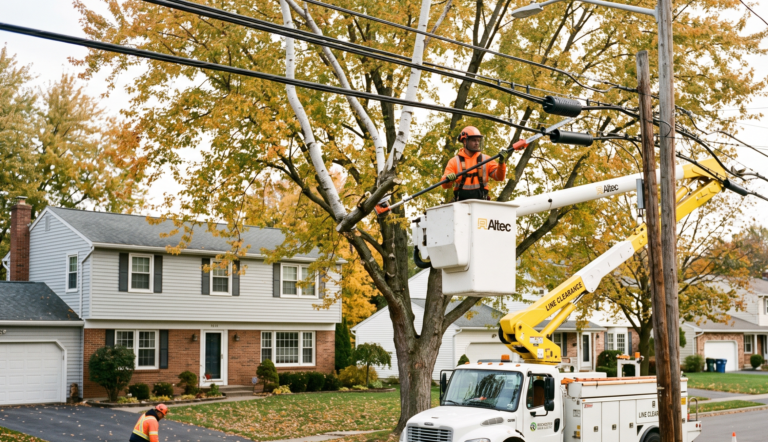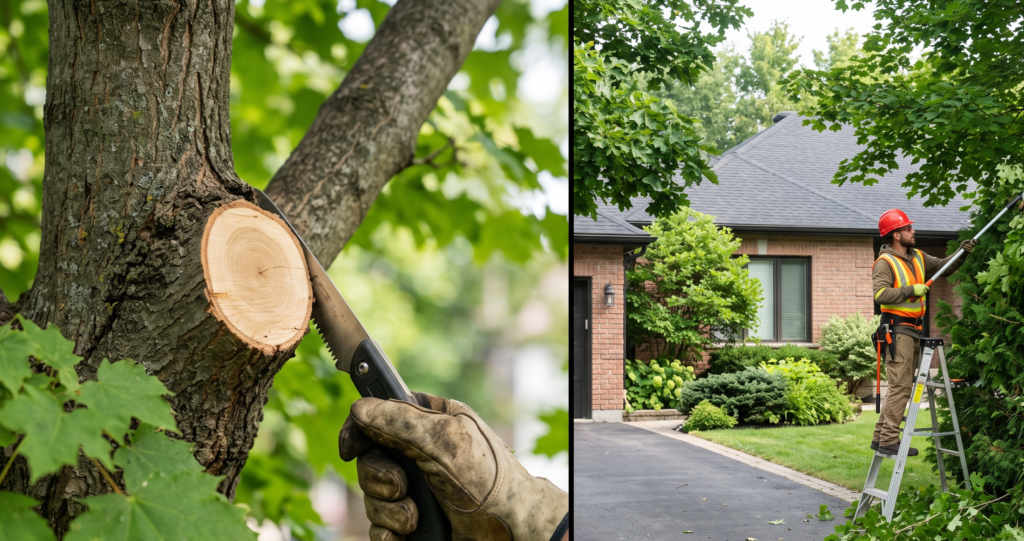
When homeowners look up at the mature oaks, sugar maples, and ornamental dogwoods framing their yards, words like “trimming” and “pruning” are often used interchangeably. However, in professional arboriculture, tree trimming and tree pruning serve entirely different purposes, rely on different cutting techniques, and are carried out at distinct times of the year. While trimming focuses primarily on aesthetics, shape, and exterior clearance, pruning is an intentional horticultural practice dedicated to structural integrity, disease prevention, and long-term tree health. Understanding the difference between tree trimming and tree pruning protects your landscape investment, prevents irreversible branch damage, and keeps your property safe across changing seasons.
At Greece Tree Service, our ISA-certified crews have spent decades working in the unique microclimates of Monroe County. From lake-effect wind resistance near Lake Ontario to structural canopy thinning across residential neighborhoods along Latta Road and Ridge Road, our field teams see firsthand how the wrong cut can permanently compromise a mature tree. This guide walks you through the biological, practical, and seasonal differences between trimming and pruning—complete with local insights, actionable care techniques, and verified answers to your most frequent questions.
1. Quick Overview: Trimming vs. Pruning at a Glance
| Evaluation Factor | Tree Trimming | Tree Pruning |
| Primary Objective | Appearance, curb appeal, exterior clearance, and shape | Biological health, structural strength, risk mitigation, and disease prevention |
| Target Material | Overgrown seasonal shoots, unruly green tips, light hedge growth | Deadwood, diseased limbs, crossing/friction branches, and co-dominant stems |
| Standard Tools | Manual hedge shears, electric/gas trimmers, pole loppers | Bypass hand pruners, arborist hand saws, rigging equipment, and chainsaws |
| Typical Timing | Growing season (spring through summer) as foliage extends | Late winter or dormant season (with specific species exceptions like flowering trees) |
| Impact on Tree Biology | Modifies density and exterior silhouette | Directs auxin flow, weight distribution, and vascular compartmentalization (CODIT) |
| Frequency | 1 to 2 times per year for hedges and rapid-growing borders | Every 3 to 5 years for mature shade trees; 1 to 2 years for young trees |
Frequently Asked Questions
Q: Can trimming and pruning be performed during the same service visit?
A: Yes. When our certified arborists evaluate a residential landscape, we frequently coordinate both. Our crew will perform structural pruning on mature interior shade limbs to eliminate split hazards while trimming perimeter shoots, hedge borders, or low-hanging clearance branches to keep driveways and walkways clean.
Q: Is tree pruning more expensive than routine tree trimming?
A: Pruning generally requires a higher investment. Tree trimming focuses on accessible, soft exterior growth, whereas structural pruning demands certified arborists, climbing harnesses, bucket access, aerial rigging, and deep knowledge of vascular anatomy to safely dismantle heavy limbs over structures and utility connections.
2. What Is Tree Trimming? Shaping, Beauty, and Space
Tree trimming is primarily concerned with an outdoor space’s exterior aesthetic and clearance boundaries. When shrubs, privacy screens, and fast-growing trees push out abundant green foliage during the late spring and early summer, they can spill over sidewalks, rub against siding, or lose their manicured proportions.
The Core Goals of Trimming
- Aesthetic Refinement: Restoring a uniform, balanced shape to ornamental shrubs, evergreens, and smaller privacy barriers.
- Boundary and Clearance Maintenance: Keeping soft seasonal growth from scratching vinyl siding, obscuring sightlines from driveways, or obstructing pedestrian pathways.
- Sunlight Penetration for Lawns: Light trimming of outer growth allows filtered sunlight to penetrate through dense crowns down to understory turf and perennial beds.
Tools Used for Trimming
Trimming relies heavily on manual hedge shears, powered mechanical hedge trimmers, and lightweight pole clippers. Cuts are often made straight across a foliage plane rather than placed at specific anatomical branch junctions. While this approach keeps ornamental shrubs uniform, applying hedge-trimming methods indiscriminately to mature trees causes structural trauma.
Frequently Asked Questions
Q: Does routine trimming cause permanent harm to an established tree?
A: Light, superficial trimming of outer green shoots does not harm a healthy plant. Harm occurs when mechanical trimmers are used to shear into thick, woody branches of mature trees rather than soft foliage, creating jagged wounds that fail to seal and invite wood-boring insects.
Q: How often should landscape hedges and decorative borders be trimmed?
A: Most fast-growing privacy hedges (such as privet, boxwood, and arborvitae) benefit from trimming once or twice during their active growing season—typically in late spring and mid-summer—to maintain density and clean geometric lines.
3. What Is Tree Pruning? Tree Biology and Long-Term Structure
Unlike routine trimming, tree pruning is a precise science grounded in arboriculture. Pruning involves the selective removal of specific vegetative components—such as diseased branch unions, weak co-dominant stems, crossing friction branches, or heavy structural deadwood.
Trees are long-lived, complex organisms that cannot heal wounded wood in the way animal tissue repairs itself. Instead, as demonstrated by Dr. Alex Shigo’s foundational research on CODIT (Compartmentalization Of Decay In Trees), trees isolate injuries by forming four chemical and physical reaction zones inside the wood. Pruning respects this biology by preserving the branch bark ridge and the branch collar during every cut, allowing the tree to produce specialized wound wood that covers and seals off internal tissues from wood-decay fungi.
The Four Essential Types of Pruning
Arborists accredited under ANSI A300 standards categorize pruning operations into targeted techniques:
- Crown Cleaning: The removal of dead, dying, diseased, crowded, or weakly attached branches across the canopy. Crown cleaning stops pathogens from traveling toward trunk wood and removes falling hazards.
- Crown Thinning: The selective removal of internal secondary branches to increase light penetration and air movement through the crown. This reduces wind resistance (the “sail effect”) during severe windstorms and lowers humidity that fuels foliar diseases.
- Crown Raising: Selectively removing lower branches to provide vertical clearance for homes, roadways, emergency vehicles, and utility lines.
- Crown Reduction: Decreasing the overall height or spread of a tree by cutting limbs back to lateral branches capable of assuming terminal roles (at least one-third the diameter of the parent branch).
Frequently Asked Questions
Q: What is a branch collar, and why is it so critical during pruning?
A: The branch collar is the swollen ring of specialized trunk wood where a branch attaches to the stem. It contains concentrated chemical defenses that trigger wound closure. Cutting outside the collar allows the tree to compartmentalize decay; cutting flush through the collar destroys this barrier and rots the trunk.
Q: Can pruning save a tree infected with a fungal or bacterial pathogen?
A: Yes, if caught early. Removing infected limbs well below the margin of discoloration (such as with fire blight or black knot) prevents systemic spread into the central trunk. Pruning tools must be sanitized between cuts using 70% isopropyl alcohol to avoid cross-contaminating healthy wood.
4. Tree Trimming vs. Tree Pruning: Key Differences Explored
Purpose: Curb Appeal vs. Structural Survival
Trimming improves immediate property aesthetics. Pruning, by contrast, determines whether an oak or sugar maple can survive sixty-mile-per-hour gusts during a severe storm without shedding structural limbs onto roofs or power lines.
Technique: Surface Shearing vs. Anatomical Precision
Shearing a branch tip stimulates a flush of erratic, weak growth known as water sprouts or epicormic shoots. These shoots have weak, surface-level attachments to the outer layer of wood, making them prone to snapping under heavy snow or wind loads. Pruning removes material at natural biological checkpoints, channeling growth energy into strong, thick structural branches.
Timing: Flexible Maintenance vs. Strict Physiological Windows
Trimming hedge lines and garden canopies can occur multiple times throughout the active growing season. Pruning must be coordinated with the tree’s annual sap flow, sugar storage cycles, and pest vulnerability windows to avoid unnecessary stress.
Frequently Asked Questions
Q: Why do trees develop water sprouts after aggressive trimming?
A: When foliage is sheared off indiscriminately, the tree enters a state of shock due to lost photosynthetic capacity. In response, dormant adventitious buds beneath the bark trigger rapid, vertical “water sprouts” to replace lost leaf surface area quickly. These shoots are weak, structurally flawed, and visually messy.
Q: How do I know if my tree needs trimming or pruning?
A: If branches are merely obstructing a garden pathway, encroaching on a fence, or looking bushy, trimming will solve the issue. If you notice dead branches, overlapping friction limbs, split forks, unbalanced weight on one side, or decay cavities, your tree requires structural pruning.
5. When to Trim and When to Prune: Seasonal Care Guide
Timing an arborist service requires matching tree physiology with seasonal stresses, particularly in regions subject to cold winters, sudden spring freezes, and lake-effect wind.
Late Winter to Early Spring (Dormant Season)
Best for: Comprehensive Structural Pruning
- Canopy Visibility: With leaves gone, arborists have an unobstructed view of the tree’s architecture, making structural defects, cracked forks, and deadwood easy to spot.
- Minimized Pathogen Entry: Wood-boring insects, bark beetles, and fungal spores remain dormant, eliminating infection vectors for oak wilt and fire blight.
- Vigor Preservation: The tree has stored energy safely in its root system for the winter. Cuts made during dormancy close quickly as soon as active spring sap begins circulating.
Late Spring to Mid-Summer
Best for: Routine Trimming, Vista Clearance, and Canopy Balancing
- Growth Management: Trimming outer growth after spring leaf-out helps restrict overgrown vegetation without starving the root system.
- Flowering Ornamentals: Spring-blooming trees—such as dogwoods, crabapples, and magnolias—form flower buds on old wood during the previous summer. Pruning them immediately after their spring blooms fade preserves the next season’s flower display.
Late Summer to Mid-Autumn
Caution: Period of Pruning Vulnerability
Heavy pruning should generally be avoided from late August through October. Late-season pruning stimulates a flush of soft green foliage that lacks time to harden before winter frosts arrive. In addition, wood-decay fungal spores are active during damp autumn months.
Species-Specific Timing Rules
- Oak Species (Quercus): Never prune between April and July. Fresh pruning cuts release volatile chemicals that attract the sap-feeding nitidulid beetle, the primary carrier of oak wilt (Bretziella fagacearum).
- Fruit Trees (Apple, Pear, Cherry): Prune in late winter to balance fruiting wood, thin congested canopies, and eliminate water sprouts that sap production energy.
- Maples and Birches: Known as “bleeders,” these trees produce heavy sap flow if cut in early spring. While this sap loss rarely harms an otherwise healthy tree, making cuts in mid-summer or deep winter avoids messy dripping.
Frequently Asked Questions
Q: Is it safe to prune dead limbs during the summer or fall?
A: Yes. Deadwood has no active vascular flow and does not transfer energy back to the tree. Dead, hanging, or cracked limbs should be removed immediately regardless of the season to eliminate sudden property damage and personal safety hazards.
Q: What happens if I prune my flowering dogwood or lilac in the winter?
A: Pruning in winter won’t kill the plant, but you will inadvertently cut off the dormant flower buds set during the previous summer. You will sacrifice that spring’s blossoms, leaving you with only foliage until the following year.
6. Common Tree-Cutting Mistakes That Ruin Landscapes
1. “Topping” a Tree
Topping involves cutting mature trunk tops and major lateral branches off flat across the canopy line. This practice removes the tree’s photosynthetic leaf factories and creates open, rotting wounds at every cut point. The tree responds with an explosion of weakly anchored water sprouts, destabilizing the tree while accelerating decay down through the main trunk.
2. Flush Cuts
Cutting a branch completely flush against the trunk cuts off the branch collar and branch bark ridge. Removing this protective anatomy destroys the tree’s natural compartmentalization boundary, opening the internal trunk wood to wood-rotting organisms.
3. Leaving Long Stubs
Leaving several inches or feet of bare wood past the branch collar prevents wound tissue from rolling across and sealing the junction. The branch stub slowly dies, rots, and serves as an open highway for wood-boring insects to access the interior heartwood.
4. Over-Pruning (“Lion’s Tailing”)
Stripping all internal foliage along a limb while leaving a single tuft of green growth at the very tip shifts structural weight entirely to the ends of branches. This creates excessive leverage that snaps branches under moderate wind and snow loads. A healthy pruning plan never removes more than 20% to 25% of an established tree’s live canopy in a single growing season.
Frequently Asked Questions
Q: Can a topped tree ever fully recover?
A: Rarely. Once the main leader is severed, internal decay spreads down the central column. While restorative crown reconstruction by a certified arborist can selectively train strong lateral shoots over several years, the tree will always carry compromised structural integrity.
Q: Should wound paint or pruning tar be applied after making a cut?
A: No. Modern arboriculture research has proven that wound dressings and black sealants trap internal moisture and fungal spores against the raw wood, accelerating rot. Trees seal themselves naturally through compartmentalization; clean cuts should always air-dry.
7. The Science of the “Three-Cut Method”
To avoid damaging a tree during pruning, professional arborists use the industry-standard three-cut method on any branch wider than one inch in diameter. Attempting to cut through a heavy limb in a single downward pass often causes the branch weight to snap the wood before the cut finishes, peeling bark down the trunk.
- The Undercut: Make a clean notch 6 to 12 inches away from the trunk on the bottom side of the branch, cutting roughly one-third of the way through. This stop-cut prevents falling bark from tearing.
- The Relief Cut: Position the saw an inch or two farther out along the branch from the undercut, cutting from the top downward. As the branch’s own weight pulls it down, it snaps cleanly at the undercut without damaging the trunk.
- The Final Collar Cut: With the heavy limb safely removed, make a precise finishing cut just outside the branch bark ridge and branch collar. This leaves a small, uniform circle of exposed wood that will seal cleanly.
Frequently Asked Questions
Q: Why does branch bark peel if I only make a single downward cut?
A: Green wood is under heavy tension and compression. As your saw cuts through two-thirds of the branch, the remaining wood fibers cannot support the heavy end weight. The limb snaps downward, ripping a strip of cambium and bark down the trunk, creating a wound that can take years to close.
Q: What type of saw is best for pruning larger branches?
A: A curved, three-edge Japanese-style arborist hand saw is ideal for clean, smooth cuts on limbs up to 4 inches thick. For thicker structural limbs, professional arborists utilize chainsaws, accompanied by rigging ropes to lower limbs without shock-loading the tree.
8. DIY Safety vs. Professional Arborist Care
While a homeowner can safely handle routine hedge trimming, shaping lower shrubbery, and removing pencil-sized twigs using hand shears from ground level, structural pruning requires specialized professional expertise.
When You Can DIY
- Trimming small ornamental bushes or low hedges from solid ground.
- Snipping tiny suckers emerging from the base of ornamental trees.
- Clearing non-structural dry twigs using bypass hand pruners.
When to Call an ISA-Certified Arborist
- Overhead Hazard Risks: Branches hanging within ten feet of utility lines, overhead power cables, roofs, or second-story windows.
- Working at Height: Any job requiring ladders or climbing equipment. Ladders positioned against dynamic, shifting tree limbs cause numerous serious homeowner accidents each year.
- Large Structural Limbs: Removing heavy branches (over two to three inches in diameter) demands dedicated rigging lines, friction brakes, and drop calculations to protect ground structures.
- Disease Diagnosis: Identifying subtle signs of decay, fungal fruiting brackets, hollow trunks, or co-dominant stems prone to split failure.
Frequently Asked Questions
Q: Why shouldn’t homeowners use a ladder to prune tree branches?
A: Ladders placed against tree branches are inherently unstable. Falling branches, shifting weight loads, or chainsaw kickback can dislodge the ladder instantly. Arborists use specialized saddle harnesses, climbing lines, or bucket trucks that keep them tied into structural anchors.
Q: How do I verify that an arborist is insured and qualified?
A: Always ask for proof of ISA (International Society of Arboriculture) certification and request a Certificate of Insurance (COI) verifying both general liability and workers’ compensation coverage sent directly from their insurance carrier.
9. Local Relevance: Caring for Trees in Rochester & Monroe County, NY
Trees in Rochester, New York, face unique environmental stresses that require tailored management. Bordered by Lake Ontario to the north and Genesee River drainages to the east, Rochester properties endure high relative humidity, intense seasonal winds, and heavy lake-effect snow and ice.
Navigating Lake Ontario Microclimates
Homes situated near the waterfront—such as along Edgemere Drive, Long Pond Road, and surrounding bays—face strong lake breezes. Canopy thinning is critical for lakeshore trees, as opening internal airflow reduces the wind sail area, helping keep trees stable during high-wind advisories.
Heavy Ice and Snow Accumulation
Winter storm events often coat Monroe County in wet, freezing rain followed by heavy snow. Without regular crown thinning and deadwood removal, dense trees readily split under the combined load of ice and wind. Pruning away narrow, V-shaped crotches and heavy lateral limbs before winter arrives is essential for preventing emergency property damage.
Common Native Trees in Rochester, NY
- Sugar and Red Maples: Frequent victims of storm damage from lake winds if structurally crowded or co-dominant stems are left unchecked.
- Northern Red and White Oaks: Require careful timing to avoid sap beetle activity and oak wilt transmission between spring and mid-summer.
- Flowering Crabapples and Pears: Widely planted across residential neighborhoods like Stone Road, Maiden Lane, and Dewey Avenue, these ornamentals require regular crown cleaning to control fire blight and fungal leaf spots.
Whether your property is located near Route 104, along Latta Road, or within neighborhoods off Elmgrove Road, scheduled maintenance balances lush summer shade with dependable storm safety.
Frequently Asked Questions
Q: When is the best time to prune oak trees in Monroe County to avoid oak wilt?
A: In Upstate New York, oaks must strictly be pruned during the deep winter months between November and March. Avoid all pruning from April through July when sap-feeding beetles are active and easily transport fungal spores from tree to tree.
Q: Are Rochester homeowners legally responsible if an untrimmed branch falls onto a neighbor’s property?
A: Under New York state law, if a tree or branch is sound and falls due to an “Act of God” (like a severe lake-effect blizzard or thunderstorm), the owner of the property where the tree landed files the insurance claim. However, if the tree had visible rot or deadwood and the owner was notified of the hazard, negligence can assign financial and legal liability to the tree’s owner.
10. Looking for Trusted Tree Trimming & Pruning “Near Me” in Monroe County?
When you need local tree care close to home, proximity and rapid arrival matter—especially when heavy winds off Lake Ontario leave deadwood hanging dangerously over your roofline, garage, or driveway. Rather than searching through out-of-area directories, working with a team based right here in Monroe County ensures fast response times and deep familiarity with local soil and weather patterns.
Greece Tree Service is located in Monroe County, providing certified arborist care, seasonal canopy pruning, and 24/7 emergency response throughout Rochester and nearby communities.
Service Areas, Road Corridors & Surrounding Communities
- North Rochester & Lakeshore Corridors: Edgemere Drive, Grand View Beach, Long Pond, Cranberry Pond, and Island Cottage Road.
- Central Rochester: Ridge Road (Route 104) corridor, Stone Road, Maiden Lane, Dewey Avenue, and Britton Road.
- West & South Rochester: Latta Road, North Rochester Road, Elmgrove Road, English Road, and Vintage Lane.
- Surrounding Service Towns & Postcodes: Hilton (14468), Rochester (14612, 14615, 14616, 14626), Gates, and Charlotte.
Frequently Asked Questions
Q: How quickly can your crew arrive for a tree trimming or pruning estimate in Rochester?
A: Because our trucks are stationed locally within Monroe County, routine pruning and health assessments are scheduled within 24 to 48 hours. In the event of storm-related limb failure or trees resting on structures, our emergency dispatch operates 24/7.
Q: Do your crews service residential properties outside of Rochester proper?
A: Yes. We regularly provide tree trimming, structural pruning, and crane-assisted tree removal throughout Northwest Monroe County, including Hilton, Parma, Gates, Irondequoit, and the greater Rochester lakefront area.
Invest in the Long-Term Health of Your Landscape
Your trees provide shade, improve curb appeal, and raise property values—when maintained with the right care. Knowing when to trim for neatness and when to prune for health helps your landscape thrive through every season.
If your trees need deadwood removal, crown thinning for lake-effect wind resistance, or a routine health assessment, working with experienced local professionals ensures every cut helps your trees live a long, healthy life. Reach out to Greece Tree Service to schedule a property evaluation with an ISA-certified arborist