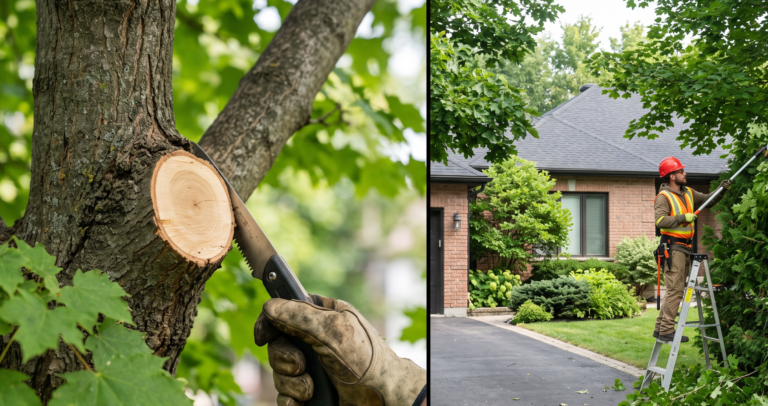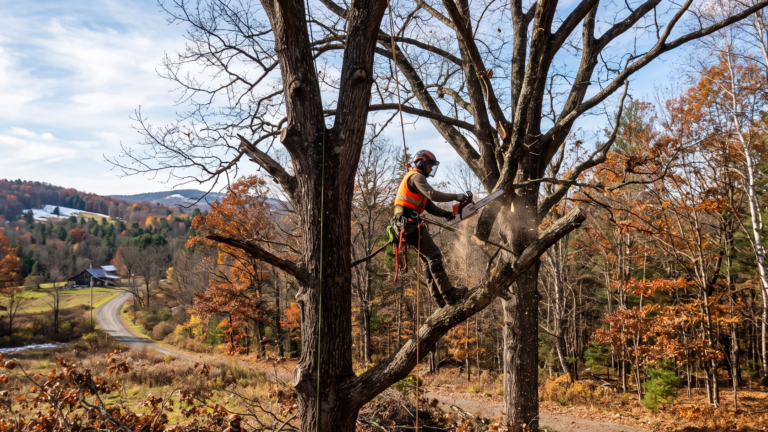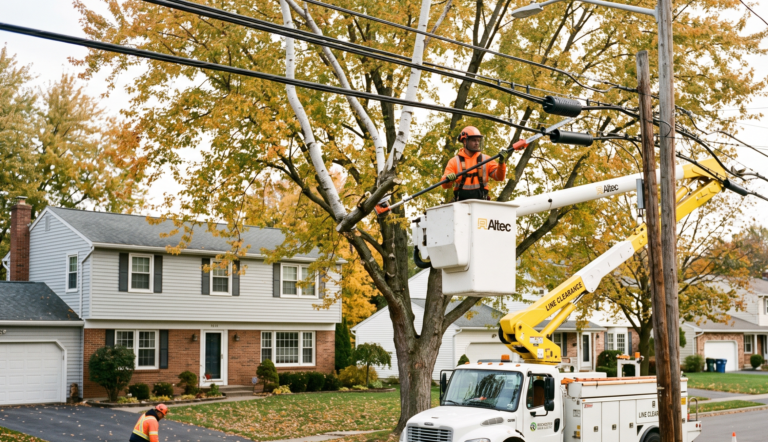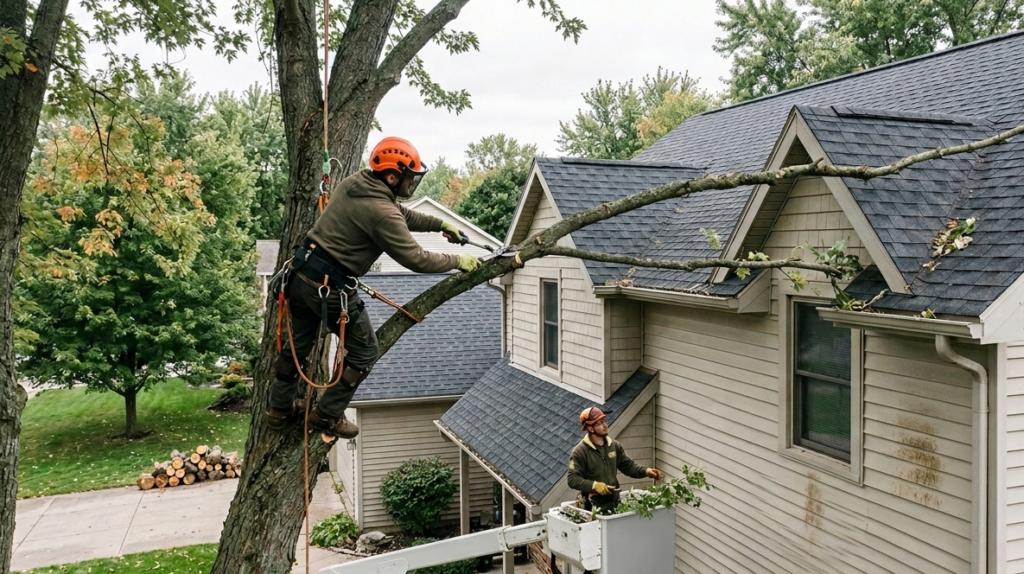
A mature shade tree can transform your property, boosting curb appeal, cutting summer cooling bills, and giving your outdoor space unmistakable character. Yet, without routine care, those same majestic branches can quietly jeopardize your home’s primary defense systems: your roof and siding. Homeowners across Greece, NY, and greater Monroe County frequently discover that storm preparation is not just about clearing downspouts; it starts high up in the canopy. Understanding how regular pruning protects your roof and siding from damage helps you prevent thousands of dollars in structural repairs, stop moisture intrusion before rot sets in, and maintain the natural stability of your landscape year-round.
Many property owners only consider tree care after a major storm limb snaps directly onto a gutter line. However, long before a branch breaks outright, minor daily friction, trapped humidity, dropping debris, and small pest highways systematically break down exterior materials. Proactive, selective pruning acts as a durable shield, preserving your building envelope while promoting healthier, more balanced tree growth.
1. The Physics of Canopy Interference: What Happens to Exterior Surfaces
To see why regular pruning is such a vital protective measure, it helps to understand how building materials interact with organic plant growth over time. Roofs and siding are engineered to shed water, handle ultraviolet sunlight, and expand or contract across seasonal temperature swings. They are not engineered to withstand continuous mechanical friction, steady biofilm accumulation, or the impact loads of heavy deadwood.
Mechanical Abrasive Friction
When winds kick up off Lake Ontario, branches hovering near your eaves whip back and forth. Even a branch no thicker than an inch acts like rough-grit sandpaper:
- Asphalt shingles: Repetitive scraping strips away the mineral granules designed to protect the fiberglass mat from UV breakdown. Once these granules rub off, shingles curl, crack, and leak.
- Metal roofs & flashing: Constant abrasion scratches protective powder coatings or galvanization, creating raw entry points for rust and premature seam failure.
- Vinyl siding: Friction causes scuff marks, cracks thin panels, or loosens interlocks, allowing driven rain to slip behind the facade.
- Cedar or wood clapboard: Scrapes break down protective stains or exterior paint, letting rain soak directly into unsealed wood grain.
Microclimate Creation: Moisture, Shade, and Biological Growth
Trees create localized microclimates. In open air, morning dew and heavy rain evaporate quickly once the sun hits shingles and siding. But when dense foliage hangs low over eaves:
- Direct sunlight is blocked, creating persistent cool, damp shade.
- Shingles stay saturated for hours—or days—longer than they should.
- This lingering dampness breeds moss, algae (Gloeocapsa magma), and lichen. Moss acts like a sponge, holding water against shingle edges and lifting them upward, which lets water back up beneath underlayments during driving rain.
Frequently Asked Questions
Q: Can a branch touching my roof cause immediate leaks?
A: While a single branch touch rarely causes an instant puncture, the chronic friction strips shingle granules within weeks. Once that waterproof asphalt layer is worn thin, rainfall seeps into the wood decking below during the next precipitation cycle.
Q: Why does moss growing under tree shade damage asphalt shingles?
A: Moss anchors itself via tiny rhizoids that embed into the mineral coating of shingles. As moss thickens, it retains ambient moisture and expands, prying shingle edges upward and breaking their water-tight adhesive seal.
Q: Does vinyl siding crack simply from tree branches resting on it?
A: Yes. In winter, vinyl panels become rigid and brittle. Wind-induced pressure from resting or swaying branches easily cracks or punctures cold vinyl siding panels.
2. Five Specific Ways Routine Pruning Protects Your Home
Routine structural pruning performed by an experienced arborist is not a simple hack-and-cut job. It is a precise pruning regimen that removes hazardous weight, directs growth away from structural walls, and clears critical buffer zones.
| Threat Factor | Direct Structural Risk | How Regular Pruning Resolves It |
| Overhanging Limbs | Impact punctures during wind/ice storms | Canopy clearance lifts weight away from roofing zones |
| Granule Abrasion | Stripped shingle protection and UV breakdown | End-weight reduction stops branch sway and whipping. |
| Fallen Debris & Leaves | Gutter blockages, fascia rot, foundation overflow | Crown thinning reduces seasonal leaf/twig drop. |
| Dense Shade Canopy | Moss, lichen, mold, persistent surface dampness | Crown thinning restores natural sunlight and air circulation. |
| Branch Contact Bridges | Insect highways (carpenter ants, termites, rodents) | Establishing a 6- to 10-foot boundary breaks pest access. |
1. Eliminating Wind-Loaded Hazard Limbs Before They Snap
Rochester winters and spring squalls bring heavy lake-effect snow, freezing rain, and high winds. Ice coatings add hundreds of pounds of dead weight to overextended branches. If a limb has internal decay, fungal pockets, or weak bark unions (including bark), the added stress snaps it directly over your roof rafters. Through seasonal maintenance, arborists identify structural defects, hollow limbs, and crossing branches, removing them before severe weather puts them to the test.
2. Creating a Reliable Clearance Zone
A general rule of thumb for residential tree care is maintaining at least 6 to 10 feet of clearance between mature canopies and building structures:
- Prevents contact even during peak gale-force wind gusts.
- Accommodates dynamic branch sway without striking gutters, soffits, or siding.
- Allows room for ongoing annual vegetative growth so limbs do not creep back against siding mid-season.
3. Preserving Gutters, Soffits, and Fascia Boards
Gutters serve one fundamental purpose: moving stormwater away from your foundation and roof decking. Unpruned trees constantly shed twigs, seed pods, catkins, leaves, and pine needles directly into gutter troughs.
- Clogged troughs cause rainwater to pool, overflow, and back up beneath the drip edge.
- Heavy water weight bends gutter hangers, peeling them away from the fascia.
- Damp organic sludge promotes wood rot along fascia boards, rafter tails, and soffit vents, eventually opening pathways into your attic space.
4. Cutting Off Pest Bridges into Your Attic and Walls
Branches touching or brushing against rooflines serve as natural bridges for pests. Carpenter ants and termites look for damp wood near exterior walls, while squirrels, raccoons, and mice use branch highways to reach roof vents, chew through plastic ridge covers, and enter attics. Keeping canopy limbs pruned well back forces wildlife to stay at ground level, significantly reducing attic intrusions and structural gnawing.
5. Boosting Sun Exposure to Deter Mold, Mildew, and Siding Stains
The north-facing and shaded sides of homes in Western New York are notorious for collecting green algae and black mildew on vinyl and fiber-cement siding. Selectively thinning the inner canopy (crown thinning) allows natural sunlight and ambient airflow to dry out siding quickly after rainfall, keeping exterior surfaces cleaner and cutting down on chemical pressure-washing needs.
Frequently Asked Questions
Q: Exactly how much distance should be maintained between branches and roof shingles?
A: An industry standard safety envelope is 8 to 10 feet of clearance above and away from roofing structures. This buffers against heavy ice weight and wind sag and prevents small animals from leaping across.
Q: Will thinning a tree canopy let in enough sunlight to dry my roof?
A: Yes. Crown thinning removes up to 15–20% of inner canopy growth, allowing sunbeams and cross-breezes to penetrate down to the roof surface, drastically accelerating post-storm dry times.
Q: How does canopy trimming stop carpenter ants from entering my house?
A: Ants often establish satellite nests inside tree cavities and use touching limbs as direct overhead highways into attics and soffits. Eliminating physical contact forces pests to cross treated ground barriers.
3. The Danger of DIY: Why Pruning Near Structures Requires Professional Rigging
Trimming small, waist-high garden shrubs is a common weekend project, but cutting mature tree limbs within striking distance of a house requires specialized rigging and arboricultural training. Improper tree trimming often creates more hazards than it solves.
The Problem with “Topping” and Indiscriminate Chopping
Topping—cutting major branches back to stubs—is one of the most damaging things someone can do to a tree. It shocks the tree, creates large wounds that invite heartwood rot, and triggers the rapid growth of weak “water sprouts” (epicormic shoots). These weakly attached shoots grow fast and break easily in light winds, multiplying future hazards over your roof.
Dangerous Drop Angles and Rigging
Dropping a heavy limb near a roof requires controlled negative-load rigging. When cut improperly, a limb can twist, swing into a bay window, crush gutters, or drop through decking. Certified tree care technicians use specialized blocks, friction brakes, and lowering lines to steer every cut piece away from the building.
Proper Wound Compartmentalization (Branch Bark Ridge & Collar)
Trees do not heal damaged tissue; they compartmentalize it (CODIT—Compartmentalization of Decay in Trees). Pruning cuts must be made just outside the branch collar without leaving long stubs or flush-cutting into the trunk. A clean cut allows the tree to roll callous wood over the opening, preventing wood-boring insects and airborne fungal spores from settling in.
Frequently Asked Questions
Q: What is the risk of cutting a tree branch myself with a chainsaw?
A: Beyond fall injuries, uncontrolled branches under internal structural tension can “barber-chair” (kick back vertically) or swing violently like a pendulum directly into your siding or windows.
Q: What happens if a branch cut is made flush against the tree trunk?
A: A flush cut removes the branch collar, which contains the tree’s chemical barrier zone. This leaves a permanent internal wound that cannot close properly, leading to core wood decay that undermines tree stability.
Q: Can bad pruning cause branches to grow back faster towards my siding?
A: Yes. Over-aggressive pruning or topping triggers defensive growth called water sprouts, which grow at twice the normal rate and lack solid structural anchorage to the limb.
4. Local Climate Realities: Monroe County & Greece, NY Considerations
Our unique geography between Lake Ontario and the Genesee Valley brings specific microclimates that directly affect local trees:
- Lake-Effect Snow and Ice Accumulation: The moisture-heavy snow common to our region places massive downward loads on deciduous hardwoods and evergreens alike. Silver maples and willow trees, known for brittle wood, are especially prone to snapping if overextended canopies hang above rooflines.
- High Spring Moisture: Extended wet periods in spring mean that moss and fungal spores thrive on unpruned, densely shaded rooftops throughout neighborhoods near Ridge Road, Latta Road, Route 104, Dewey Avenue, and Elmgrove Road.
- Prevailing Wind Corridors: Strong westerly and northwesterly winds sweeping across open water produce sustained mechanical stress on lakeside properties, making end-weight reduction pruning an absolute necessity for large oaks, maples, and locusts near residences.
Frequently Asked Questions
Q: Why are silver maples particularly dangerous near homes in Greece, NY?
A: Silver maples grow rapidly and produce soft, brittle wood with narrow branch angles. Under Rochester’s heavy lake-effect ice events, unpruned silver maples are among the most common trees to suffer canopy splits.
Q: Does our proximity to Lake Ontario affect how often trees must be pruned?
A: Yes. Lake-effect wind corridors cause higher mechanical fatigue on mature branches. Trees along shoreline areas generally require biennial structural checkups to manage canopy drag.
Q: When is the risk of tree limb failure highest in Monroe County?
A: The peak failure periods are late autumn wind storms (when trees still hold wet leaves) and late winter wet snow/ice storms that overload dormant branch structures.
5. Identifying Early Canopy Warning Signs
How do you know it is time to schedule a pruning assessment? Watch for these common warning signs around your exterior:
- Scratches and Thuds at Night: If wind produces repetitive scraping or thumping sounds against your attic vents, second-story walls, or eaves, contact is already happening.
- Granule Accumulation at Downspout Exits: Piles of coarse shingle granules washing out of downspouts often indicate branches are rubbing higher up on roof planes.
- Persistent Green Film on Siding: Siding that stays perpetually green with algae, even after cleaning, is likely shaded by low, dense tree foliage.
- Deadwood Visible Overhead: Look up into the canopy above your home. Do you see bare, bark-stripped, or brittle branches suspended over your ridge line? These “widowmakers” can fall unexpectedly on calm days.
- Squirrel or Rodent Activity on Roofs: If you see squirrels comfortably walking from branch tips straight onto your roof ridge, your perimeter boundary has closed in too far.
Frequently Asked Questions
Q: How do I tell the difference between cosmetic leaf drop and structural deadwood?
A: Deadwood displays no leaf buds in spring, sheds its bark in flakes, and snaps cleanly when bent. Live branches retain flexible twigs with green cambium tissue beneath the bark surface.
Q: Why do gutters fill with gravel-like grit when branches touch the roof?
A: That grit is the protective mineral layer of your shingles, scraped loose by moving branches and washed into the gutter system by subsequent rains.
Q: Should I worry if small twigs only touch my gutter during high winds?
A: Yes. High winds generate dynamic torque. What looks like harmless brushing during a breeze can generate enough force during a storm to twist aluminum gutters off their mounting brackets.
6. Recommended Pruning Intervals for Property Protection
Different tree species and ages require different management intervals:
- Mature Hardwoods (Oaks, Hard Maples, Beeches): Inspect every 2 to 3 years. These slow-to-moderate growers benefit from deep structural pruning to clear deadwood and manage weight distributions.
- Fast-Growing Species (Silver Maples, Willows, Poplars): Inspect every 1 to 2 years. Their soft wood and aggressive growth rates create rapid canopy expansion toward structures.
- Evergreens & Conifers (Pines, Spruces): Inspect every 3 to 4 years. While they don’t drop leaves, heavy, needle-laden branches trap ice and rub siding continuously if planted too close to foundations.
- Post-Storm Checkups: Following significant winter ice events or severe windstorms, have an arborist look for hairline stress fractures or partially detached hanging branches trapped high in the canopy.
Frequently Asked Questions
Q: What season is optimal for pruning large shade trees away from roofs?
A: Late winter (dormant pruning) is ideal. The absence of foliage provides clear visibility of structural defects, and trees experience minimal physiological stress when cut before sap starts flowing in spring.
Q: Can I prune a tree that is actively threatening my roof during the summer?
A: Absolutely. Hazardous, dead, or roof-contacting branches should be pruned immediately, regardless of the month, to prevent structural impact.
Q: Does regular pruning reduce homeowner insurance premiums or avoid claim denials?
A: While it may not automatically lower premiums, maintaining a documented pruning schedule prevents insurers from denying claims under “failure to maintain property” clauses when a storm brings a limb down.
Tree Pruning & Canopy Clearance Near Me: Greece & Monroe County Service Area
When heavy winds blow in from Lake Ontario or sudden ice storms hit Rochester, searching for a dependable tree service near me shouldn’t be an emergency gamble. Greece Tree Service provides rapid-response tree trimming and pruning, structural canopy clearance, and 24/7 emergency tree service throughout Greece, NY, and neighboring Monroe County towns.
Complete Service Territory & Neighborhoods
Our crews and bucket trucks are dispatched daily across Monroe County, keeping response times short across:
- Town of Greece: North Greece, Barnard, Braddock Bay, Grand View Heights, and properties along Maiden Lane, Stone Road, Latta Road, and Long Pond Road.
- Northwest Suburbs: Hilton (14468), Spencerport (14559), and Charlotte/Lake Ontario shoreline.
- Greater Rochester Area: Gates, Irondequoit, and residential hubs connecting via Route 390 and the Lake Ontario State Parkway.
Whether you have a 60-foot oak leaning toward your roofline on Dewey Avenue or need crown thinning away from vinyl siding near Ridge Road, our ISA-certified team provides safe, fully insured property protection.
Find Greece Tree Service on Google Maps.
Below is our verified location hub. Homeowners across Monroe County can view our location, review our service radius, and verify our credentials on Google Maps:
Frequently Asked Questions
Q: How quickly can your crew arrive for an emergency branch over my roof in Greece, NY?
A: We offer 24/7 emergency response across Greece and Monroe County, with crews dispatched rapidly to stabilize hazards and secure roofs.
Q: Do you offer free on-site tree pruning estimates in Rochester?
A: Yes. We provide transparent, no-obligation on-site evaluations with upfront pricing across Monroe County.
Q: Are your crews fully insured for tree pruning over residential homes?
A: Yes. Greece Tree Service carries full liability coverage and comprehensive workers’ compensation, ensuring your home, roof, and lawn are 100% protected throughout the project.