Living in Upstate New York means experiencing the full brunt of four distinct, dramatic seasons. From lake-effect blizzards sweeping across Lake Ontario to humid summer heatwaves and vibrant autumn foliage, our regional climate dictates how our landscapes thrive. If you own property in the Greater Rochester area, Monroe County, or the surrounding towns like Greece, Webster, Irondequoit, and Hilton, you likely understand the delicate balance between natural beauty and seasonal property hazards. A question our certified crews hear almost every week is, “When is the best time of year to trim trees in Upstate New York?“
The short, botanically sound answer is late winter through very early spring (roughly late January through March), while trees are fully dormant and before the spring bud break. However, the complete reality depends on species genetics, regional pest lifecycles (like oak wilt and emerald ash borer), storm damage, and structural tree care goals. Pruning at the proper moment safeguards your trees against fungal pathogens, prevents heavy lake-effect snow loads from snapping weakened limbs, and channels vital energy into vigorous spring blooms and leaf canopies.
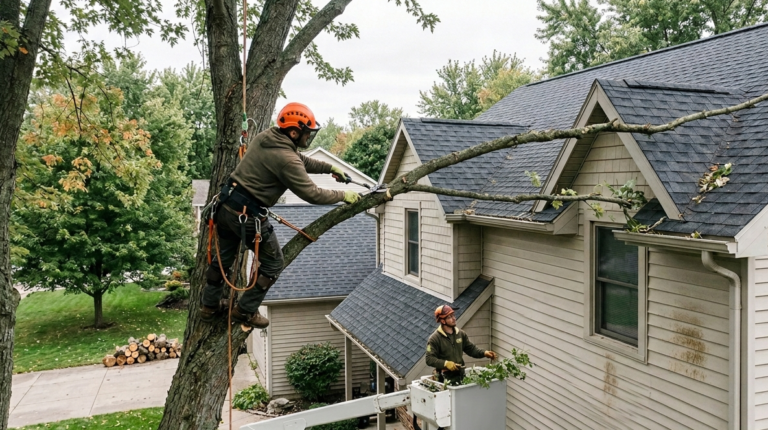
Whether you need seasonal crown thinning or are searching for trusted tree trimming near me to clear branches off your roofline before winter storms arrive, timing your service correctly makes all the difference. In this comprehensive guide, our ISA-certified team breaks down tree trimming across every season in Western and Central New York, explores the specific biological timing for native hardwoods and evergreens, outlines seasonal storm risks, and explains how professional arboricultural care keeps your home, family, and landscape safe year-round.
Frequently Asked Questions
Q: Can I trim trees at any time of year in Upstate New York?
A: While emergency trimming for storm-damaged, diseased, or hazardous branches should be completed immediately regardless of the calendar, routine structural and maintenance pruning should always follow species-specific dormancy windows to avoid stress and disease transmission.
Q: Does late winter pruning harm trees during deep freezing spells?
A: No. Fully dormant deciduous trees have drawn their sap and sugars down toward their root systems, which acts as a natural antifreeze within their woody cells. Freezing ambient temperatures will not damage clean cuts made outside the active growing season.
Understanding Upstate New York’s Hardiness Zones & Microclimate
Upstate New York landscapes sit primarily within USDA Hardiness Zones 5b through 6b. Neighborhoods bordering Lake Ontario—including the Town of Greece, Charlotte, and Irondequoit—benefit from a microclimatic effect that tempers sudden early-autumn freezes. However, that same moisture generates heavy, wet lake-effect snow and devastating freezing rain from December through March.
When a branch is cut, the tree does not “heal” like animal tissue. Instead, it relies on compartmentalization—a botanical process known as CODIT (Compartmentalization of Decay in Trees)—producing chemical and physical boundary walls to isolate the wound from wood-decaying organisms. Timing determines how effectively these walls form:
- Winter Dormancy (Lowest Infection Risk): In sustained freezing weather, fungal spores, bacteria, and sap-feeding beetles are inactive. Cuts remain sterile until the spring flush begins.
- Spring Leaf Flush (Peak Vulnerability): Trees expend stored starches to push new foliage and floral buds. Removing green foliage at this stage reduces photosynthetic potential and depletes energy stores.
- Mid-to-Late Summer (Secondary Pruning Window): After leaves have matured, canopies can be selectively thinned to improve air circulation or remove defective limbs without inducing excessive stress.
- Autumn (The High-Risk Zone): Pruning in September or October can stimulate late tissue growth that will freeze in the first hard frost, while fall rains release high volumes of airborne wood-decay spores directly onto exposed wounds.
Frequently Asked Questions
Q: How does the Lake Ontario microclimate alter pruning schedules compared to Southern NY?
A: Lake-moderated zones experience extended damp autumns and delayed spring warm-ups. As a result, pruning windows shifts 2 to 3 weeks later into March compared to properties further south in the state.
Q: What is the danger of pruning during the fall leaf-drop period?
A: Trees are pulling essential nutrients out of their leaves and transferring them to the root system while shutting down cell division. Cuts made during this transition cannot compartmentalize until spring, leaving them open to aggressive autumn fungal spores.
Seasonal Breakdown: When to Prune in Upstate New York
1. Late Winter (Dormant Season): The Gold Standard
For the vast majority of deciduous shade and ornamental trees across Monroe County, late winter—specifically late January through late March—is the ideal window.
Benefits of Dormant Pruning
- Clear Canopy Visibility: Without leaves obscuring the branching structure, arborists can spot structural faults, crossed limbs, narrow V-shaped crotches, cracks, and fungal conks.
- Accelerated Callus Formation: Cuts made just before spring allow the cambium layer to rapidly seal the wound margin as soon as growth resumes.
- Minimal Soil Disturbance: Frozen ground protects residential lawns from turf rutting and soil compaction caused by heavy aerial lifts, grapple trucks, and chippers.
- Deterrence of Pest Vectors: Inactive insect populations prevent the transmission of vascular wilt diseases like oak wilt and Dutch elm disease.
2. Spring: The Post-Bloom Window
Spring requires a selective touch.
What to Prune
- Spring-Flowering Species (Post-Bloom Only): Varieties like lilacs, Eastern Redbuds, Magnolias, Flowering Dogwoods, and Forsythias develop flower buds on the prior year’s wood. Pruning them in winter strips away their spring blossoms. Wait until flowers drop in May or early June, then shape promptly.
- Deadwood Cleanout: Once the canopy fully leafs out, dead and winter-damaged limbs become easy to identify and can be removed without touching healthy foliage.
What to Avoid
- Heavy Crown Thinning: Never remove more than 15% of the live canopy during spring. The tree needs its leaves to replenish the energy spent producing them.
- Oaks and Elms: Pruning these species in spring is strictly avoided due to insect activity.
3. Summer: Maintenance and Clearance
Summer pruning (late June through August) addresses specific clearance and growth-control needs.
What to Prune
- Hazard & Clearance Pruning: Leafed-out limbs carry maximum weight, especially after heavy rain. Summer is the time to spot and lift branches that hang over roofs, gutters, driveways, or sidewalks.
- Water Sprouts and Suckers: Remove rapid, upright shoots along internal branches and basal suckers around the trunk base to channel nutrients to the main canopy.
- Controlling Canopy Spread: Trimming branch tips in midsummer slows outward expansion along tight property lines.
4. Autumn: Emergency-Only Period
Pruning healthy limbs in autumn is discouraged across Upstate New York.
Risks of Fall Pruning
- Active Fungal Spores: Fall rains create ideal conditions for fungi to release spores, which land directly on fresh pruning cuts.
- Stalled Defense Responses: Dormant cambium cells cannot actively form barrier zones over wounds until the following spring.
- Cold Injury: Late prunes can trigger fresh tender growth that fails to harden off, causing tip dieback during sudden November freezes.
Exception: Broken, cracked, hanging, or dead branches should be removed immediately to protect structures from winter wind and ice loading.
Frequently Asked Questions
Q: Can I prune my flowering crabapple during late winter?
A: Yes. Although you may lose a few spring blooms, late-winter dormant pruning is the safest method to establish strong scaffolding, eliminate suckers, and prevent the spread of fire blight.
Q: What should I do if a heavy thunderstorm snaps a limb in August?
A: Have the damaged stub cleanly pruned back to the branch bark collar immediately. Leaving torn, ragged wood invites wood-boring insects and internal heartwood rot.
Species-Specific Pruning Guide for Upstate New York
Every tree species in Western New York has its own biological schedule:
| Tree Species | Optimal Window | Secondary Window | Crucial Restrictions & Warnings |
| Sugar & Red Maples | Mid- to Late Summer (July–Aug) | Mid-Winter (Jan–Feb) | Late-winter cuts cause heavy sap bleeding. While not fatal, summer trimming avoids messy driveways and sap stains. |
| Red, Black & White Oaks | Mid-Winter (Dec–Feb) | Strictly Dormant Only | NEVER prune between April 1 and July 31. Fresh sap attracts nitidulid beetles that carry lethal oak wilt. |
| Paper & River Birches | Mid-Summer (June–Aug) | Mid-Winter (Jan) | Like maples, birches bleed heavily if cut in late winter or early spring. |
| Fruit Trees (Apple, Pear, Cherry) | Late Winter (Feb–March) | Early Spring (Pre-bud) | Dormant pruning increases sunlight penetration, boosts fruit yield, and minimizes bacterial fire blight risks. |
| Eastern White Pines & Spruces | Late Winter to Early Spring | Early Summer (Candle stage) | Prune pines during candle elongation; avoid cutting into older, bare conifer wood, which cannot regenerate buds. |
| American & European Elms | Mid-Winter (Dec–Feb) | Strictly Dormant Only | Never prune during warm months when European elm bark beetles are active, as they spread Dutch Elm Disease. |
Frequently Asked Questions
Q: Why does my birch or sugar maple tree drip water constantly after a branch is cut in March?
A: This is positive root pressure pumping sap upward toward expanding buds. While it will not kill the tree, it can attract insects and leave residue on parked cars, which is why summer pruning is often preferred for these species.
Q: When is the right time to prune cedar or arborvitae privacy hedges in Monroe County?
A: Early spring, just as new growth begins, is ideal. Light tip trims can also be done in midsummer, but avoid pruning after early September to prevent winter burn on new growth.
Regional Tree Diseases and Insect Vectors in Western New York
Aligning pruning schedules with insect life cycles is one of the most effective ways to protect your property’s trees from serious local pests and diseases.
1. Oak Wilt (Bretziella fagacearum)
Oak wilt is a destructive fungal pathogen that plugs the water-conducting vessels of oak trees. Members of the red oak family often drop their leaves and die within weeks of infection. The fungus is carried by small sap-feeding nitidulid beetles attracted to fresh wounds. The New York State Department of Environmental Conservation (DEC) explicitly advises against cutting oaks between April and July. Routine pruning should only take place during deep winter dormancy.
2. Emerald Ash Borer (Agrilus planipennis)
The Emerald Ash Borer has spread across Monroe County, destroying millions of untreated ash trees. Larvae bore through the inner phloem, cutting off water and nutrient flow. Infested ash branches dry out rapidly, becoming structurally brittle and prone to sudden failure. While pruning cannot cure an active infestation, dormant assessments help determine whether an ash tree can be treated with trunk injections or should be removed before winter storms bring it down.
3. Apple Scab & Bacterial Fire Blight
Common throughout residential crabapple and apple plantings in the Rochester area, these diseases thrive in warm, wet spring weather. Pruning during late winter dormancy—using sterilized equipment—removes infected branches and reduces spore counts without spreading active bacteria across the canopy.
Frequently Asked Questions
Q: What should I do if an oak limb tears away during a June storm?
A: Immediately seal the fresh tear with water-based tree wound dressing or non-toxic latex paint. While wound paint is generally discouraged for normal pruning cuts, it is recommended for summer oak wounds to mask the sap odor from disease-carrying beetles.
Q: Can dead ash branches be safely left on the tree through winter?
A: No. Dead ash wood loses its structural elasticity quickly. Heavy snow or freezing rain can cause these limbs to snap without warning, making early removal essential.
Winter Storm Preparedness in the Lake Ontario Snowbelt
Properties throughout Greece, Hilton, Charlotte, and Irondequoit frequently endure lake-effect snowstorms and freezing ice events. An ice accumulation of just one-half to one inch can increase branch weight by thirty to forty times, causing unpruned, structurally compromised limbs to fail.
Identifying High-Risk Canopy Hazards Before Winter
- Included Bark & Tight “V” Crotches: Stems that grow closely together at acute angles often develop included bark within the joint, creating a structural fault line vulnerable to splitting under snow loads.
- Overextended, Lever-Arm Limbs: Long horizontal branches carrying heavy tip growth act as levers during strong winds, putting high mechanical stress on the trunk attachment.
- Deadwood and Hanging Branches: Dead limbs rot from the inside out and have no flexibility, often snapping under the first winter freeze.
- Canopy Imbalance: Trees with heavily one-sided canopies due to competing shade or improper past cutting are more likely to uproot during saturated soil conditions and high-wind events.
Frequently Asked Questions
Q: Does pruning reduce the chance of my tree blowing over in a winter windstorm?
A: Yes. Canopy thinning reduces wind resistance by allowing gusts to pass through the crown rather than pushing against it like a sail, lowering rotational force on the root plate.
Q: What should I do if a tree branch is resting on an overhead service wire?
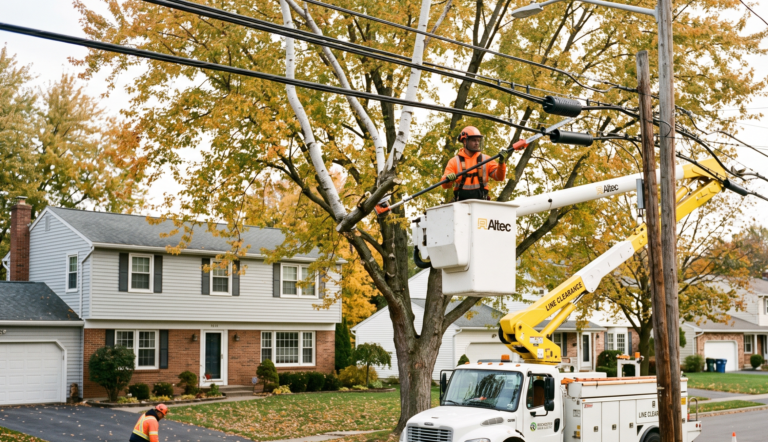
A: Never attempt to trim it yourself. Branches near power lines present severe electrocution risks. Contact your utility provider (such as RG&E) or an arborist certified for line clearance to handle the situation safely.
The Value of Professional Pruning: Anatomy and ANSI A300 Principles
Pruning is more than simply clearing branches away from siding; it requires a working knowledge of tree anatomy and growth patterns.
Essential Pruning Methods
- Crown Cleaning: Removing dead, dying, diseased, or broken branches throughout the canopy to eliminate safety hazards and stop decay spread.
- Crown Thinning: Selectively pruning live branches to reduce canopy density, improve interior light penetration, and reduce wind resistance while maintaining natural form.
- Crown Raising (Elevation): Removing the lowest branches to clear space over sidewalks, driveways, roofs, and traffic view corridors.
- Crown Reduction: Reducing overall tree height or spread by cutting branches back to lateral limbs that are at least one-third the diameter of the removed stem.
Why “Tree Topping” Is Harmful
Topping—cutting back major upright stems to indiscriminate stubs—is one of the most damaging things you can do to a tree. It starves the root system, leaves wide-open wounds that rot quickly, and triggers dense, weakly attached sprout growth that is prone to breaking during high winds. Certified arborists use crown reduction techniques instead of topping.
Frequently Asked Questions
Q: How far away from the trunk should a pruning cut be made?
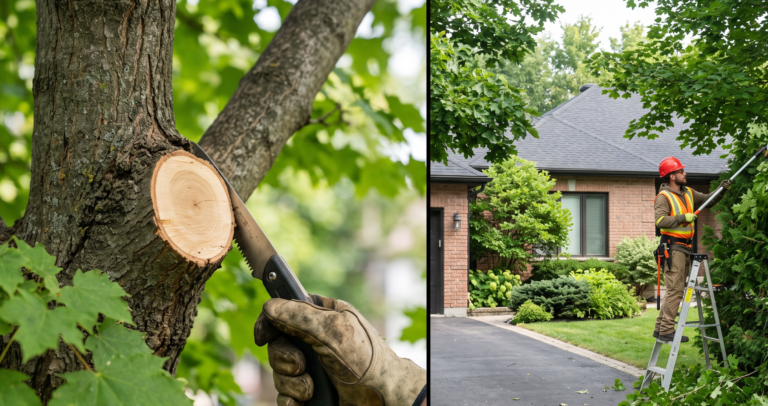
A: The cut should be made just outside the branch bark ridge and branch collar, preserving the swollen ring of tissue at the base of the limb. Never cut flush against the trunk.
Q: What is “lion-tailing,” and why is it problematic?
A: Lion-tailing is the mistake of stripping out all interior foliage, leaving leaves only at the tips of long branches. This shifts weight to the ends of limbs, making them far more likely to snap under snow and wind.
Safety, Utility Regulations, and DIY Hazards
Pruning large shade trees with chainsaws and extension ladders is one of the leading causes of residential property damage and emergency room visits each year.
The Real Dangers of DIY Tree Cutting
- Unpredictable Wood Tension: Branches under tension or compression can snap back with significant force when cut, causing severe injury or throwing an operator off balance.
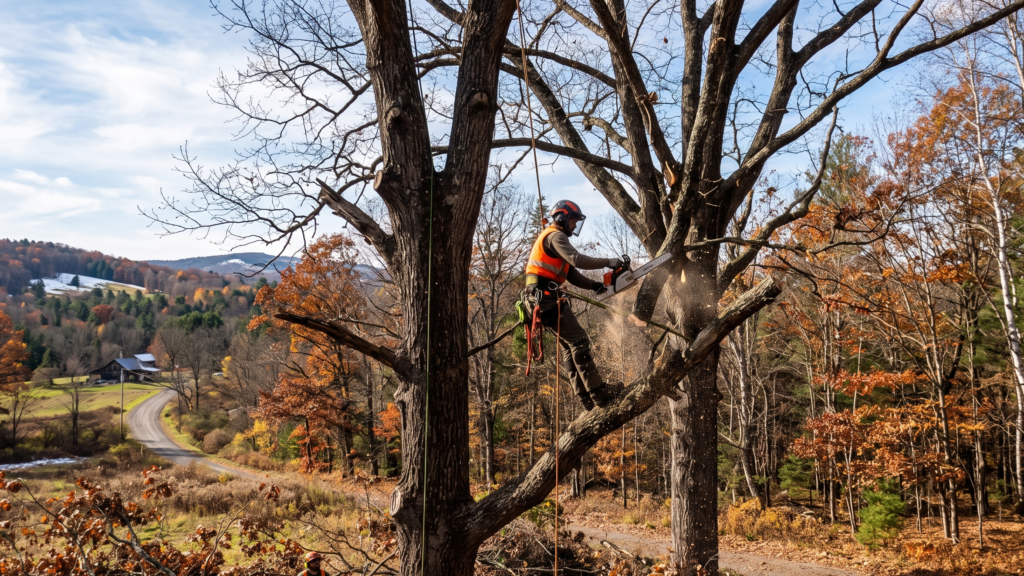
- Falling From Ladders: Ladders placed against shifting branches are unstable. Arborists use aerial lifts or specialized rope-and-harness climbing systems that keep them secured to a primary tie-in point.
- Electrical Arc Flashes: Electric current can arc from high-voltage distribution lines through branches, saws, or aluminum ladders directly to the operator on the ground.
- Property Damage and Liability: Working without professional rigging equipment can result in heavy timber dropping onto roofs, fences, air conditioning units, or adjacent properties, leading to costly insurance complications.
Frequently Asked Questions
Q: Are tree trimming contractors required to carry insurance in Monroe County?
A: Yes. Reputable tree services carry both comprehensive general liability insurance and workers’ compensation coverage to protect homeowners from liability if an accident occurs on their property.
Q: Can a neighbor trim branches that extend across the property line?
A: Under New York State common law, property owners can trim branches that overhang their property boundary, provided they do not trespass onto the adjacent property and do not damage the health or structural stability of the tree.
Professional Tree Care in Greece & Monroe County, NY
Understanding local conditions is essential for proper tree care. From the sandy soils along Lake Ontario’s shoreline to the dense clay found across Henrietta and Gates, root stability and wood strength vary widely across our region.
At Greece Tree Service, our ISA-certified team brings decades of collective field experience to every property. We evaluate each tree’s structure, species needs, and proximity to buildings to ensure safe, professional pruning that supports long-term canopy health.
- ISA-Certified Arborists: Highly trained professionals who follow ANSI A300 pruning and ANSI Z133 safety guidelines.
- TCIA-Accredited Quality: Fully audited for safety, transparent business ethics, and professional standards.
- Modern Equipment: Equipped with low-ground-pressure spider lifts, grapple trucks, and protective turf mats to safeguard your lawn and driveway.
- Thorough Clean-up: Every job includes chipping, brush hauling, and sweeping or raking the work area clean.
Frequently Asked Questions
Q: How far in advance should I book my dormant winter pruning?
A: Because late winter (January through March) is the ideal window for hardwoods and fruit trees, our winter calendar fills up quickly. We recommend booking your inspection in November or December.
Q: Do you offer free estimates for tree trimming in Greece and Rochester?
A: Yes. We provide transparent, written estimates that detail the specific pruning methods to be used, with no unexpected fees.
Looking for Professional Tree Trimming Near Me in Monroe County?
When storms move in off the lake or aging trees begin crowding your roofline, you need a local, fully insured team that can respond quickly. If you are searching for tree trimming near me anywhere in Monroe County, Greece Tree Service is based right in your area.
Our crews work daily throughout the Town of Greece and nearby communities. Whether your property is on Ridge Road, Latta Road, Route 104, Elmgrove Road, Stone Road, Maiden Lane, or Dewey Avenue, we bring our equipment directly to your curb with no travel surcharges.
Areas We Serve:
- Town of Greece: North Greece, Grand View Heights, Braddock Bay, and surrounding neighborhoods (Zip Codes: 14626, 14612, 14616, 14606)
- Greater Rochester & Monroe County: Charlotte, Hilton, Webster, Irondequoit, Gates, Spencerport, Hamlin, and Parma
Find Our Local Service Hub
Frequently Asked Questions
Do I need a permit to trim trees in the Town of Greece or Rochester?
On private residential property, you generally do not need a permit to prune your trees. However, if a tree sits within the municipal right-of-way between the sidewalk and curb, it is managed by the local Department of Public Works. Always confirm your property lines before pruning street-side trees.
My neighbor’s tree branches hang over my property line. Can I trim them?
Under New York State common law, you may trim branches that extend across your property boundary, up to the lot line. However, you cannot enter the neighbor’s property without permission, and you must not cut branches in a way that damages the tree’s overall stability or health.
Will trimming trees in winter cause them to freeze?
No. Deciduous trees native to New York enter deep cellular dormancy. Their water and sap migrate downward, and their cells produce sugars that act as natural antifreeze, keeping healthy pruning cuts safe from frost damage.
How much does professional tree trimming cost in Upstate New York?
Pricing depends on tree size, branch structure, access challenges, and proximity to buildings or utility lines. Routine shaping of smaller ornamental trees can cost a few hundred dollars, while crown thinning or deadwood removal on mature hardwoods requiring bucket trucks and specialized rigging typically ranges higher. We offer free on-site assessments to provide clear, upfront quotes.
Frequently Asked Questions
Q: Does Monroe County collect brush after I trim my trees?
A: Most towns offer scheduled spring and fall brush pickups with specific size and bundling limits. Professional tree services handle all chipping and debris removal on-site so you don’t have to wait for town collection.
Q: Can I request the wood chips from my pruned trees?
A: Yes. If you would like to keep fresh wood chips for garden mulch or path ground cover, simply let our crew know before we begin work on your property.
Schedule Your Seasonal Tree Assessment Today
Properly timed pruning protects your trees from winter damage, prevents property hazards, and keeps your landscape healthy through every season. Whether you have large maples near your roof, evergreens exposed to lakeshore winds, or fruit trees ready for their dormant trim, professional care makes all the difference.
Contact the certified team at Greece Tree Service today to book your on-site evaluation, seasonal pruning, or hazard assessment.