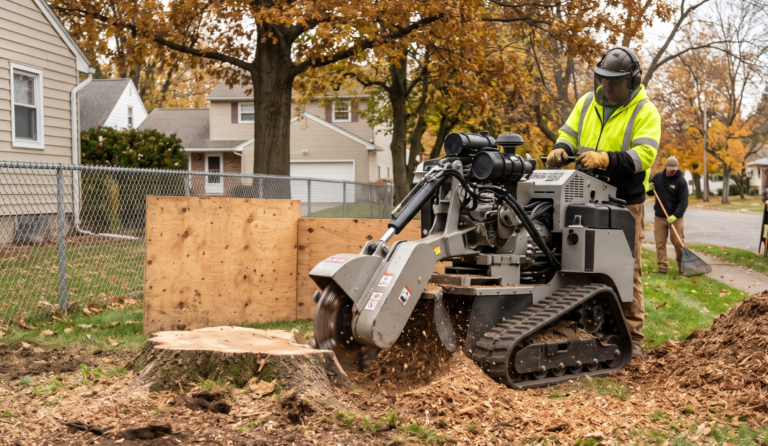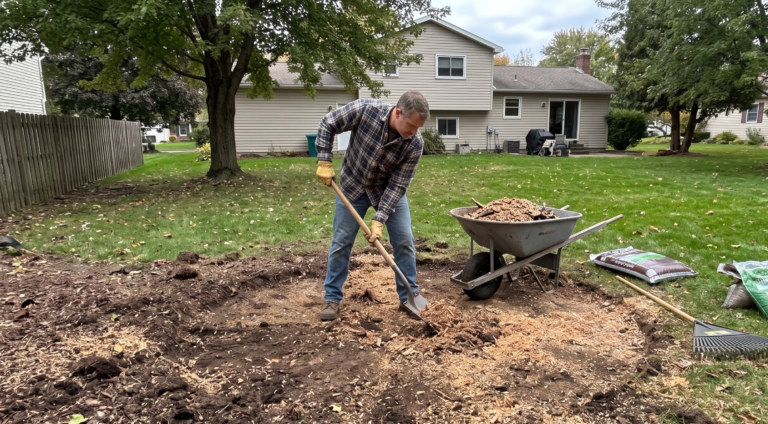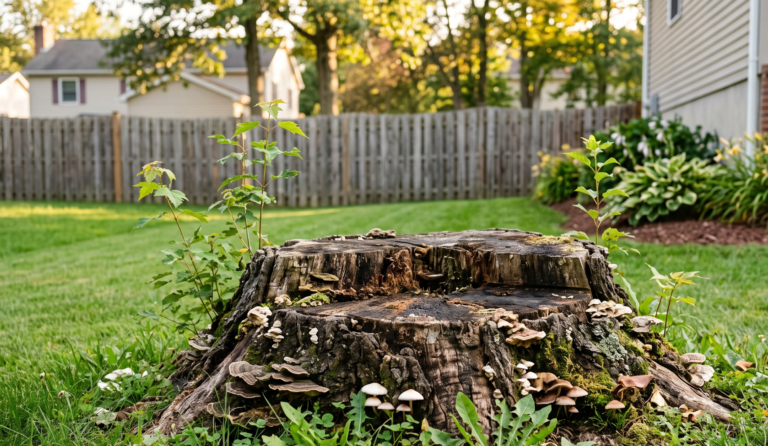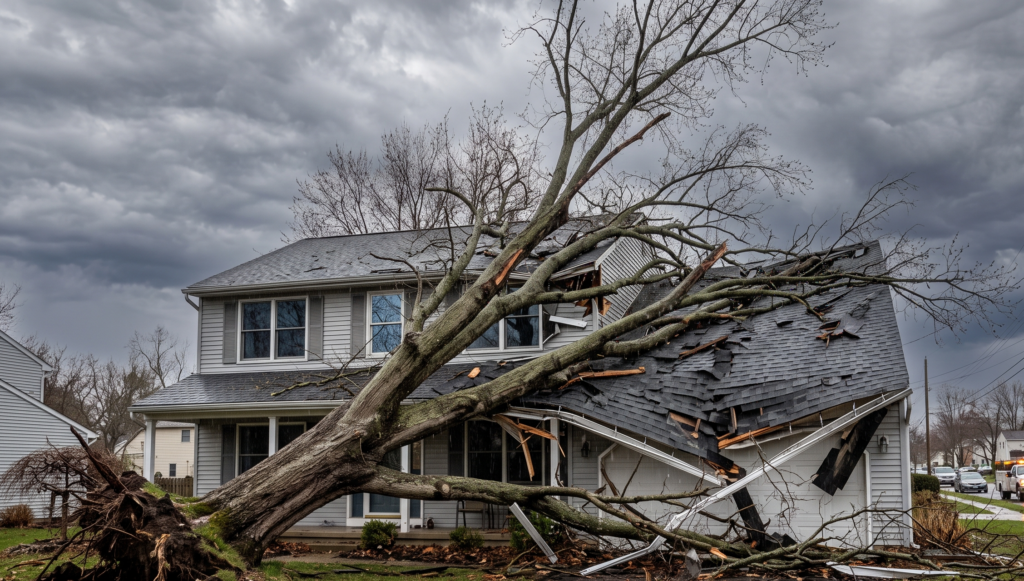
The sickening crack of hardwood snapping, followed by a violent thud that shakes your foundation, is a homeowner’s worst nightmare. During intense Western New York windstorms, heavy lake-effect snows, or sudden summer squalls rolling off Lake Ontario, large branches and mature trees often succumb to saturated ground and severe structural strain. When an oak, silver maple, or dense pine crashes through your roofline, immediate confusion sets in. Knowing what to do when a tree falls on your house can mean the difference between routine roof repairs and catastrophic framing collapse, electrical fires, or severe personal injury.
This comprehensive emergency guide walks you step-by-step through immediate life-safety actions, utility shutoffs, insurance claim documentation, crane-assisted arborist extraction, and local emergency tree services across Greece, NY, and the greater Rochester area.
1. Immediate Life Safety & Evacuation (Minutes 0–30)
When a multi-ton tree strikes a residence, treat the home as an active structural collapse zone. Roof framing assemblies are engineered to support distributed static loads (like snow) and minor live loads, not several tons of green timber impacting with dynamic kinetic energy.
Step 1: Evacuate the Premises Immediately
- Gather all family members and domestic pets immediately.
- Do not waste time attempting to retrieve physical valuables, clothing, or electronics.
- Move away from the impact zone swiftly. Do not walk directly beneath compromised ceiling drywall or plaster; dynamic shifts in roof trusses can trigger delayed collapses minutes after the initial blow.
- Establish a muster station across the street or well clear of any exterior load-bearing walls that show outward bowing.
Step 2: Clear Downed Utility Lines & Electrical Hazards
Mature trees rarely fall without snagging service drops or tearing down municipal distribution wires.
- Treat every downed wire as fully energized and lethal. High-voltage lines can energize wet soil, standing rainwater, chain-link fences, and damp tree limbs up to 30 feet away.
- If your electrical weatherhead or service mast has been torn from your home’s exterior siding, do not touch the siding, exterior breaker box, or electrical meter base.
- If you smell burning insulation or witness electrical arcing, immediately call 911.
Step 3: Dial 911 for Structural and Safety Hazards
Contact local emergency services immediately if:
- Anyone is trapped, injured, or unaccounted for.
- You detect smoke, sparks, or natural gas odors.
- Doors are jammed shut in their door jambs, windows have shattered from structural racking, or interior drywall shows diagonal stair-step cracks.
First responders (firefighters and police) secure the perimeter, confirm utility disconnections, and declare whether the structure is stable enough for temporary re-entry.
Frequently Asked Questions
Q: Can I re-enter my house to retrieve passports, wallets, or prescription medications?
A: No. Rafters and ceiling joists under tension can shear without warning long after impact. Re-enter only after local fire officials or a licensed structural engineer explicitly clears the building.
Q: What should I do if a live power line falls directly across my vehicle in the driveway?
A: Remain inside the vehicle. The rubber tires provide insulation from the ground. If there is an active fire forcing you out, jump completely clear of the car without touching both the vehicle frame and the ground simultaneously.
2. Navigating Underground and Overhead Utility Hazards
A fallen tree causes more than visible roof damage. When an entire tree uproots (a “root plate failure”), it heaves upward tons of soil, ripping out underground gas and water pipes.
Natural Gas Leaks
Natural gas lateral lines frequently run beneath front yards directly within the drip lines of large shade trees.
- If you smell a rotten-egg sulfur odor, hear high-pressure hissing from the displaced root crater, or see soil bubbling, evacuate immediately upwind.
- Do not switch on flashlights, activate garage door openers, or start motor vehicles nearby.
- Call Rochester Gas and Electric (RG&E) and 911 immediately from a safe perimeter.
Severed Domestic Water Lines
When a root ball tears out municipal water service lines, pressurized water can flood basements through foundation wall fractures. If you hear rushing water in your lower level, locate your exterior curb stop valve or alert the municipal water department dispatch immediately.
Frequently Asked Questions
Q: Who fixes my electrical service mast if the tree ripped it off my siding?
A: The electric utility owns the overhead drop wire, but the homeowner is legally responsible for the weatherhead, conduit mast, and meter box base. You must hire a licensed electrical contractor to repair the mast before the utility will safely reconnect your service.
Q: How can I tell if my root plate failure cracked my foundation wall?
A: Check your basement directly beneath the displaced root crater for horizontal shearing cracks, active water intrusion, or displaced concrete masonry units (CMUs).
3. Step-by-Step Emergency Action Matrix
Once life safety is secured, follow this operational sequence to manage structural protection, claims intake, and site restoration:
| Phase | Operational Objective | Key Actions Required |
| Phase 1: Secure Life Safety | Isolate immediate hazards. | Evacuate, clear the electrical perimeter, call 911, and notify utilities. |
| Phase 2: Mitigate Property Loss | Halt secondary interior damage. | Engage a 24/7 emergency tree service; deploy crane extractions. |
| Phase 3: Preserve Insurance Claim | Document proof of loss. | Capture comprehensive video/photos; establish living expense files. |
| Phase 4: Site Dry-In & Clearance | Weatherproof structural breach | Install heavy-duty framed tarps; remove structural loads safely. |
Frequently Asked Questions
Q: Should I contact my insurance provider or an emergency tree service first?
A: Contact a certified 24/7 emergency tree service first to dispatch crane and rigging crews. Most insurance policies explicitly require policyholders to take prompt emergency measures to mitigate further property damage.
Q: Does an insurance adjuster need to inspect the tree before it is removed?
A: No. Waiting for an adjuster while rain falls through a punctured roof breaches your duty to mitigate. Clear photographic and video documentation provides the evidence adjusters require.
4. Comprehensive Photo and Video Documentation for Insurance
Insurance adjusters require clear, irrefutable evidence proving the cause of loss, structural impact points, and the necessity of specialized rigging or crane equipment.
The Homeowner’s Evidence Protocol
Before tree crews make their initial cuts, capture complete visual evidence from safe angles outside the structure:
- Wide Context Framing: Photograph the complete site from the road, showing the tree’s original root zone, trunk failure point, and its final resting angle on your dwelling.
- Point of Impact Details: Take close-ups of crushed eaves, snapped 2×6 or 2×8 roof rafters, buckled exterior walls, damaged gutter systems, and broken windows.
- Interior Water and Structural Intrusion: If public safety personnel have deemed the interior safe to enter momentarily, document cracked ceiling plaster, sagging drywall, wet insulation, and water pooling on floors.
- Trunk and Root Plate Condition: Document the health of the wood at the failure point. Photos showing green, fibrous wood prove the tree was alive and succumbed to storm forces (“Act of God”), which protects against negligence allegations.
- Continuous Narrative Video: Record a slow, uninterrupted video stating the date, time, prevailing weather conditions, and visible points of structural impact.
Frequently Asked Questions
Q: How should I catalog personal belongings ruined by rainwater coming through the roof?
A: Compile an itemized spreadsheet detailing the item description, brand name, model number, serial number, purchase date, and estimated replacement cost, accompanied by photos of the damaged items.
Q: What if the tree came from municipal property?
A: Photograph the municipal easement or street curb clearly showing that the base of the trunk sits on town or city property, and file an incident notice with the town clerk alongside your insurance claim.
5. Homeowners Insurance: Coverage Mechanics & Liability
Navigating tree damage claims requires a firm understanding of property casualty insurance provisions, especially regarding neighbor disputes and tree removal limits.
The “Act of God” Principle
Under standard property insurance rules in New York State, if a healthy tree falls due to high winds, heavy snow, or lightning, it is considered an act of God.
- Your homeowner’s insurance policy covers the repairs to your structure (minus your policy deductible), regardless of whether the tree was rooted on your property or your neighbor’s.
- Your insurer does not seek reimbursement from your neighbor unless proof of pre-existing negligence exists.
Proving Negligence
If a neighbor’s tree was visibly dead, heavily rotted, leaning dangerously, or shedding large limbs, and they failed to act despite prior warnings, they may be found legally negligent.
- Key Evidence: Written correspondence, certified letters, or professional arborist reports sent to the neighbor prior to the storm establish that they were on notice.
- When negligence is proven, your insurance company can pursue subrogation against the neighbor’s carrier to recover repair expenses and refund your deductible.
Tree Removal Limits vs. Structural Mitigation
- Tree Extraction (Covered): Costs to lift the tree off your roof, siding, or deck are covered under Dwelling Coverage (Coverage A) because the home cannot be dried-in or repaired with the tree resting on it.
- Debris Hauling Sub-Limits: Most standard homeowner policies (HO-3 forms) cap debris removal at $500 to $1,000 per fallen tree once the tree has been cut up and set safely on the lawn. Clarify whether your tree care provider bills extraction and hauling under distinct line items.
Frequently Asked Questions
Q: Will my insurance premiums increase if I file a storm damage tree claim?
A: Weather-related claims are generally categorized as “no-fault” Act of God occurrences. While individual state laws vary, single storm claims are less likely to trigger non-renewal compared to liability or neglect claims.
Q: What is the difference between Actual Cash Value (ACV) and Replacement Cost Value (RCV)?
A: ACV reimburses the depreciated value of damaged building materials based on age. RCV pays the full cost to rebuild or replace the damaged property with materials of like kind and quality at current market rates, once repairs are completed.
6. Why You Need an ISA-Certified Crane Tree Removal Service
Removing a fallen tree resting against a damaged roofline requires advanced rigging engineering. It bears no resemblance to standard tree felling in an open field.
Stored Mechanical Energy: Tension and Compression
A fallen tree wedged into a residential framing system is a kinetic system under severe load:
- Limbs resting against shingles act as loaded springs (tension), while the top fibers of arched logs are squeezed together (compression).
- One improper chainsaw cut can release thousands of foot-pounds of stored mechanical energy, kicking the log into the operator or snapping it downward through the attic ceiling.
- Improper cutting can shift the tree’s center of gravity, causing the trunk to roll down the roof pitch and crush exterior load-bearing walls.
Crane-Assisted Extraction
Professional emergency arborists employ specialized knuckle-boom loaders and mobile hydraulic cranes to stabilize the tree before cutting:
- Synthetic Rigging Slings: The tree is secured at calculated balancing points using high-strength synthetic slings attached directly to the crane hook.
- Tensioned Suspension: The crane takes the static weight of the tree off the home’s framing before an arborist touches the trunk with a chainsaw.
- Vertical Pick: The arborist cuts the trunk into manageable sections. The crane lifts each log vertically up and away from the roofline, eliminating friction against shingles, gutters, and rafters.
Essential Contractor Credentials
Ensure any contractor hired for emergency tree removal provides proof of:
- ISA (International Society of Arboriculture) Certified Arborists on site.
- Commercial General Liability Insurance with minimum policy limits of $1,000,000 to $2,000,000.
- Workers’ Compensation Insurance explicitly coded for high-hazard tree removal (not general landscaping or lawn care).
- TCIA (Tree Care Industry Association) accredited safety protocols.
Frequently Asked Questions
Q: Can I use my personal chainsaw to clear branches off my low roof?
A: Absolutely not. Uncontrolled weight release can cause structural roof collapse beneath you, and kickback incidents on unstable, slippery pitched surfaces carry high risks of fatal injury.
Q: Why does crane-assisted tree removal cost more than standard tree trimming?
A: Crane operations require certified crane operators, specialized heavy equipment, commercial insurance coverage, and advanced arborist rigging gear to protect your home from further damage.
7. Emergency Roof Tarping & Secondary Water Damage Prevention
The physical impact of a tree is only the first phase of destruction; rainwater, sleet, and melting snow represent an equally serious secondary threat to your home’s interior.
The Homeowner’s Legal Duty to Mitigate
Under New York insurance policies, homeowners must take all reasonable, timely measures to protect their residence from secondary damage after an initial loss. Leaving a punctured roof exposed to the elements can result in the denial of coverage for interior drywall rot, ruined insulation, and toxic black mold growth.
Standards for Professional Roof Tarping
- Industrial Polyethylene Tarps: Deploy UV-resistant, woven polyethylene tarps with a minimum thickness of 10 to 12 mils. Thin camping tarps degrade within days under direct sun and tear during high winds.
- Furring Strip Anchor System: Tarps must be battened down using 2×4 or 1×3 lumber furring strips secured with exterior structural screws through the tarp into solid roof decking. Never use bricks, tires, cinder blocks, or duct tape.
- Ridge Cap Extension: The top edge of the tarp must extend completely over the peak (ridge cap) of the roof to prevent water from running underneath the upper barrier edge.
Frequently Asked Questions
Q: Does my insurance policy pay for the lumber and tarps used to cover the roof?
A: Yes. Emergency weatherproofing and board-up services are covered under the mitigation provisions of your policy. Retain all invoices from the emergency tree service or restoration crew.
Q: How long can a professionally installed roof tarp remain on my house?
A: A securely fastened, industrial-grade tarp provides reliable weatherproofing for 60 to 90 days, offering ample time for insurance claim approvals and roofing contractor scheduling.
8. Regional Climate & Tree Hazards: Greece & Monroe County, NY
Properties throughout Greece, Irondequoit, Hilton, and Monroe County face specific geographic and meteorological risks that increase the probability of mature tree failures.
The Lake Ontario Shoreline Effect
Communities along the southern shore of Lake Ontario experience high winds, heavy humidity, and shifting lake breezes:
- High Soil Saturation: Lakeside properties often feature high water tables and dense clay soils that retain water. When sustained fall or spring rains saturate the soil, root anchoring weakens significantly.
- Unobstructed Gale Gusts: Strong storm fronts cross open water without topographic resistance, slamming into coastal tree canopies with sustained gusts between 50 and 65 mph.
Winter Lake-Effect Snow and Ice Loading
Monroe County sits squarely in the path of regional lake-effect snow squalls and freezing rain:
- Wet lake-effect snow clings heavily to broad limbs, dramatically increasing the static weight applied to lateral branches.
- Vulnerable Tree Species: Silver maples (Acer saccharinum) and boxelder feature brittle wood that splits under heavy ice. Furthermore, thousands of local green and white ash trees weakened by the Emerald Ash Borer (Agrilus planipennis) stand hollowed out, ready to shear in moderate winds.
Frequently Asked Questions
Q: Are town permits required in Greece, NY, to remove an emergency tree that has struck a house?
A: No. Municipalities across Monroe County waive standard tree removal notifications or permits when an active tree failure poses an imminent hazard to human life or primary residential structures.
Q: Which trees along Lake Ontario are most likely to blow down in high winds?
A: Mature Eastern White Pines and shallow-rooted Norway Maples fail most frequently along the lake due to dense, sail-like evergreen canopies and shallow root systems in saturated clay soils.
9. Proactive Tree Health Management: Preventing Future Failures
While severe weather cannot be stopped, regular maintenance significantly reduces the likelihood that large trees will fall on your home.
1. Canopy Thinning and Wind-Sail Reduction
Pruning mature trees allows heavy storm winds to pass through the branches rather than pushing against a solid wall of leaves. Thinning should always be performed by an ISA-certified arborist who preserves the tree’s natural branch collar and structure.
2. Structural Cabling and Bracing
Trees that split into two main trunks (co-dominant stems) often feature weak, included bark at the “V” union. Arborists install high-strength steel or dynamic synthetic cables high in the canopy to balance physical stress loads between the stems, preventing the tree from splitting down the center during ice storms.
3. Maintaining the 10-Foot Roof Clearance Zone
Keep all tree branches trimmed back a minimum of 10 feet from your roofline and gutters. Limbs that touch shingles scrape away protective ceramic granules, encourage moss growth, and can easily puncture the roof deck during sudden storm wind shears.
Frequently Asked Questions
Q: What is a tell-tale sign that an oak or maple is rotting internally?
A: Look for bracket- or shelf-shaped fungal conks growing directly on the lower trunk, sawdust-like frass from wood-boring insects, longitudinal trunk cracks, or large dead branches in the upper canopy.
Q: Does tree topping help make a tree safer against storms?
A: No. Tree topping harms structural integrity. It triggers the rapid growth of weakly attached water sprouts that break off easily in high winds, while exposing the main trunk cuts to interior heartwood rot.
10. Emergency Tree Removal Near You: Greece & Monroe County Dispatch
When severe weather strikes the Lake Ontario basin, you need an emergency response crew stationed nearby, ready with heavy equipment. Greece Tree Service maintains rapid-response equipment yards in Monroe County, allowing our crane and bucket crews to deploy promptly across our primary service zones:
- Town of Greece: Comprehensive coverage through North Greece, Barnard, Braddock Bay, Grandview Beach, and along the Dewey Avenue, Long Pond Road, and Mt. Read Boulevard corridors.
- Lakeside Suburbs: 24/7 priority emergency response across Hilton (14468), Hamlin, Parma, and Charlotte.
- Rochester Metro Core & West Suburbs: Rapid structural clearance teams available in Irondequoit, Gates, Chili, Spencerport, and Brockport.
Whether you face a cracked willow resting on your roof, an uprooted silver maple blocking your driveway, or downed branches entangled with outbuildings, our team is equipped to extract the hazard safely, protect your home from rain, and guide you smoothly through your insurance documentation.
Frequently Asked Questions
Q: How quickly can an emergency tree removal crew reach my home in Greece?
A: Because our heavy cranes, loaders, and equipment yards are based in Monroe County, emergency crews typically arrive within 45 to 90 minutes to secure the perimeter, inspect utility clearances, and begin structural mitigation.
Q: How do search engines and map apps determine which tree service is closest to me?
A: When you search for “tree removal near me,” search algorithms calculate your device’s coordinates against verified Google Business Profiles, operational service radii, business citations, and localized schema markup.
Q: Can you help me handle my insurance claim paperwork?
A: Yes. We provide itemized estimates, photographic logs, and separate invoices for structural extraction versus debris disposal, giving your insurance adjuster the precise documentation required.
Protect Your Property with Reliable Emergency Tree Services
A fallen tree resting on your home is an urgent emergency that requires professional equipment and experienced handling. Attempting cleanup on your own can compromise personal safety, worsen structural damage, and complicate your insurance claim.
If a tree has fallen on your home, contact an ISA-certified, fully licensed, and insured tree care specialist immediately. Our crews will safely lift the tree, secure your roof against the weather, and protect your home every step of the way.